
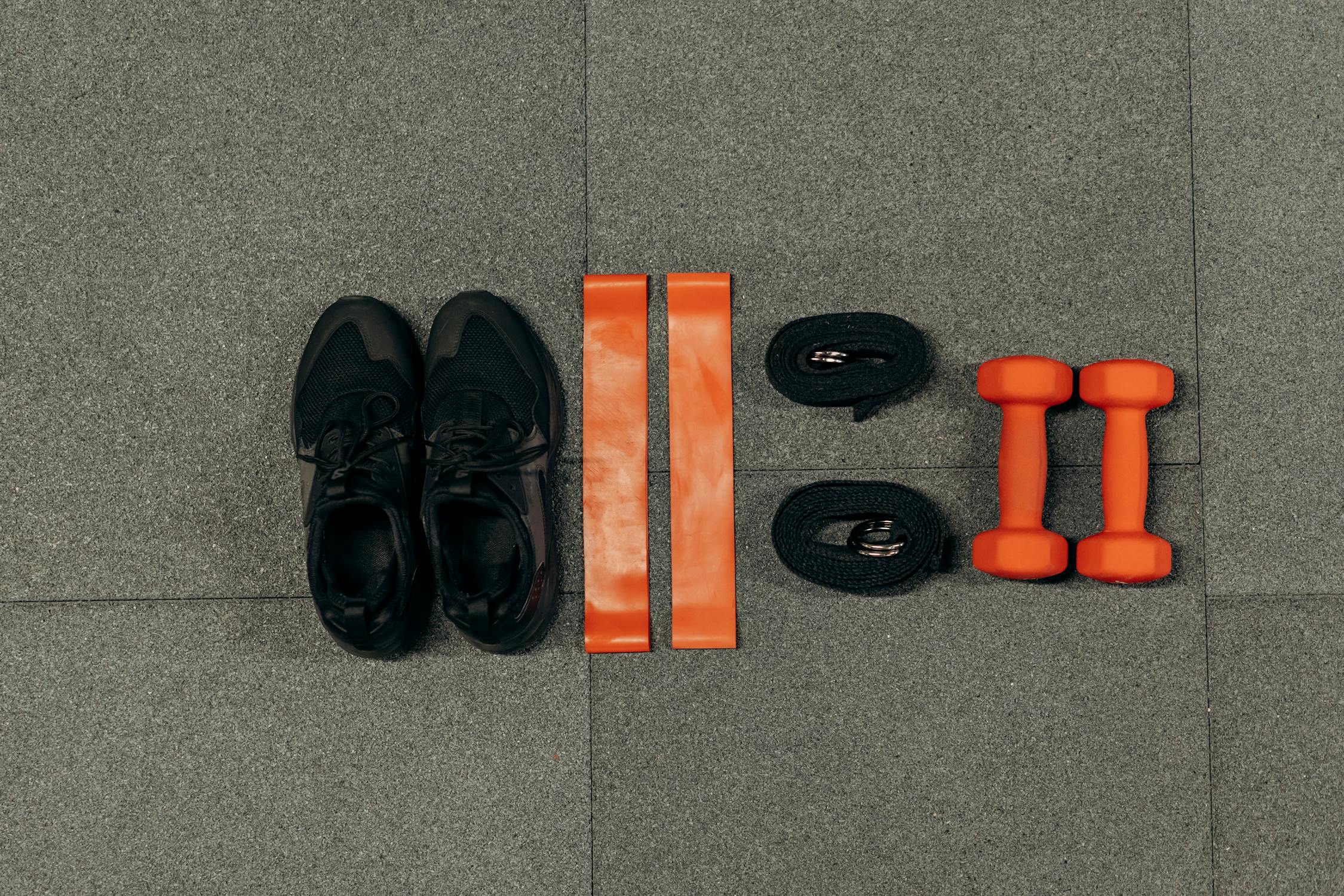
One of the most important things you can do for your body to maintain health is lifting weights. Diet and aerobic (cardio) activity are equally important, but strength training provides many major benefits, including:
- Increases metabolism. Muscle burns more calories than fat, so the more muscle you have, the more calories you’ll burn all day long.
- Strengthens bones, especially important for women
- Increases muscle strength and muscle endurance
- Helps avoid injuries
- Increases confidence and self-esteem
- Improves coordination and balance
Getting started with strength training can be confusing – what exercises should you do? How many sets and reps? How much weight? The routine you choose will be based on your fitness goals as well as the equipment you have available and the time you have for workouts.
WHAT IS THE RIGHT ROUTINE?
- Warm-up (aerobic) – three to five minutes low intensity to break a sweat. (Examples: running, cycling, walking, etc.)
- Pre-exercise stretching – hold at a gentle stretch for a ten count; do one to two repetitions of each stretch, no bouncing. Stretch muscles that you’ll be using during your workout. (Example: hamstrings, calves, quads, and chest.)
- Weight training – choose from programs described on the back of this page.
- Post-exercise stretching/strengthening – 1 to 2 minutes/muscle group for stretching, and add abdominal and low back strengthening if they have not been included in your weight training routine.
HOW MANY EXERCISES SHOULD I DO?
At least 1 exercise for each major muscle group (upper body, lower body, and core).
HOW MUCH WEIGHT?
The correct weight should produce fatigue by the last repetition in each set, or determine resistance by using a percentage (typically 60-80%) of your one-repetition maximum. (Example: If you can lift a maximum of 50 lbs. one time during leg extension, 70% of that would be 35 lbs.)
HOW MUCH TIME BETWEEN WORKOUTS?
Rest: 48 to 72 hours between workout sessions for each muscle group.
HOW OFTEN SHOULD I DO MY WORKOUT
The number of sessions per week for each muscle group – 2 to 3 sessions, on non-consecutive days.
WHAT IS THE CORRECT LIFTING TECHNIQUE
Maintain proper postures and move through the lift in a slow, controlled manner (usually 2-4 count for the push/pull/contraction with a 4-6 count for the relax/recovery phase).
WHAT IS RANGE OF MOTION?
Each lift should be done through a joint’s entire range of motion.
HOW DO I MAINTAIN MUSCLE BALANCE?
Balance the program to include opposing muscle groups (Example: hamstrings oppose quadriceps.)
HOW SHOULD I PROGRESS?
Increase the resistance or weight of an exercise when you are able to complete all repetitions of the last set without muscle fatigue.
WHY WARM-UP AND COOL DOWN?
Brief aerobic exercise will warm the muscles, making them flexible and ready for activity. Cool-down exercises are important to return the body to resting level.
“NO PAIN, NO GAIN”
Wrong! Pain is your body’s warning signal to stop before you hurt yourself.
